





Blog
When does endodontics become a necessary treatment?

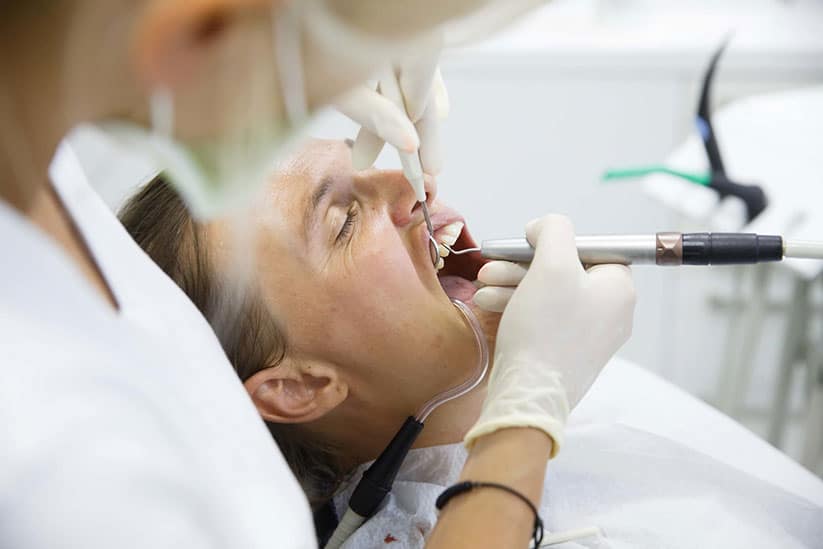
Endodontics is a preventive dental treatment that helps you avoid, on many occasions, losing your tooth. That is why it is important that it is done on time.
When do I know I need a root canal?
Endodontics becomes important when your dentist considers that it is necessary to eliminate the dental pulp affected by an infection. In the beginning it is possible that you may have had cavities that you did not take care of in time and the infection reached the inner part of your tooth, thus damaging the pulp, other causes for which a nerve treatment is needed are:
- Amalgams misaligned or fractured close to the nerve.
- Radicular infections.
- Dental Trauma.
- Restorative fines for esthetics.
Why is it important to have a root canal?
It is important to determine a good diagnosis in time, because if it is a cavity can progress until the problem can not be solved by endodontics, if not by extraction due to lack of tooth structure. If the infection that entered your tooth has already reached the pulp and started to injure it is it is important that you have a root canal so that you can avoid the complete loss of your tooth. In principle with endodontics only the pulp is entered and this is extracted without removing your tooth.
What are the symptoms that indicate that I need a root canal?
It is important that you see your dentist at least twice a year for a thorough cleaning. Doing this will prevent you from having to have treatments to solve any problems. Some symptoms that indicate that you may need a root canal are:
- Pain when eating hot or cold things.
- Biting Pain.
- Apostema ( FISTULA)
- Coronal or restoration fracture.
Is a post-endodontic restoration always necessary?
After a nerve treatment, if it is a piece that presented extensive caries or fracture of the restoration, it will almost always need a fiberglass endoposte, which gives support to that piece with weakness.
Is there postoperative pain when performing Endodontics?
This will depend on the initial diagnosis, however, usually analgesic, anti-inflammatory medication is sent after treatment for 3 to 5 days.
Do you always send Antibiotics?
Not always, only when there is an area in the root of the tooth and the diagnosis lets us know that there is pulpal or nerve death, which tells us that there are bacteria in the interior.
Do you have any more questions about endodontics? Leave us your comments.


 English